


Sale!

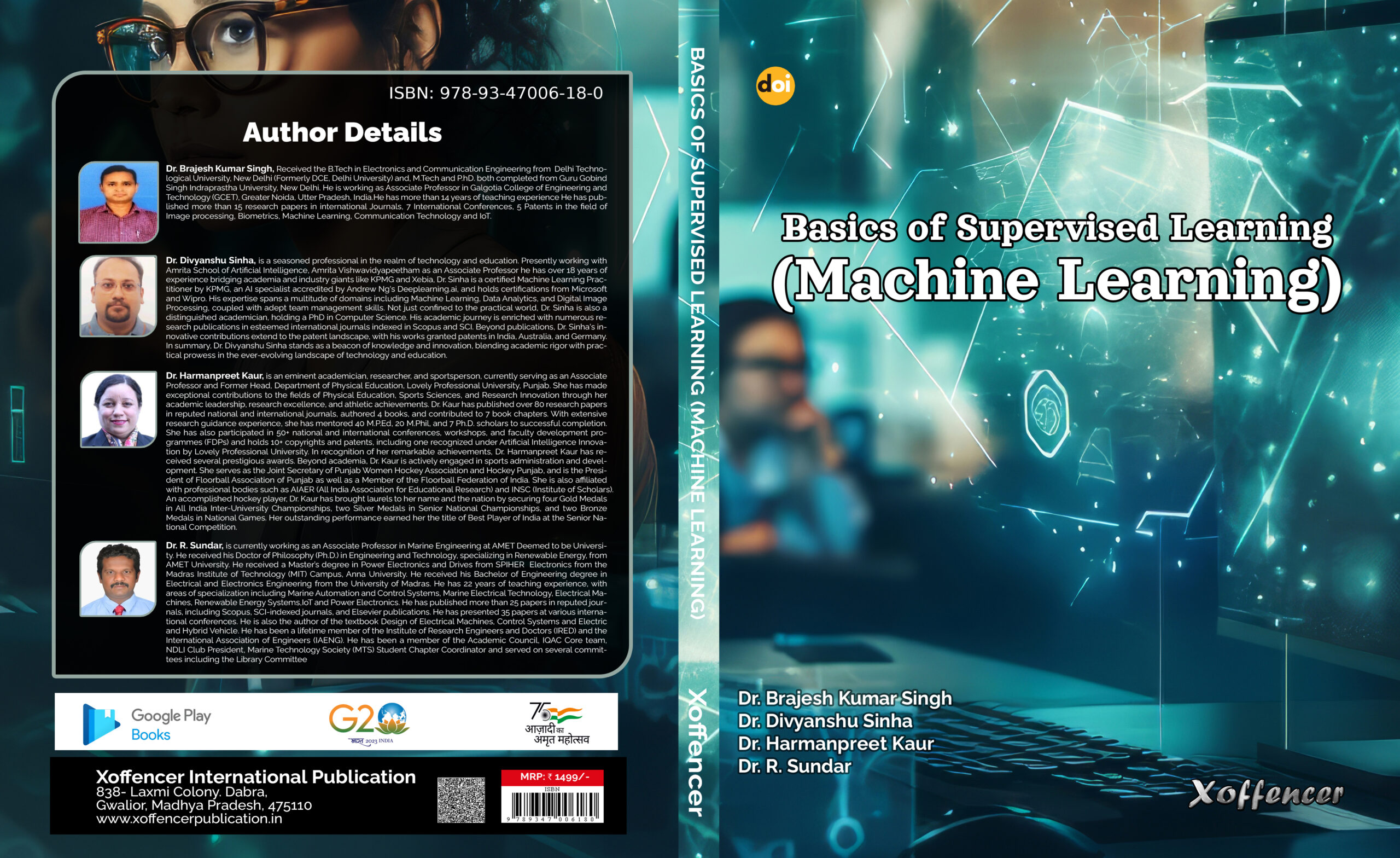
BASICS OF SUPERVISED LEARNING (MACHINE LEARNING)

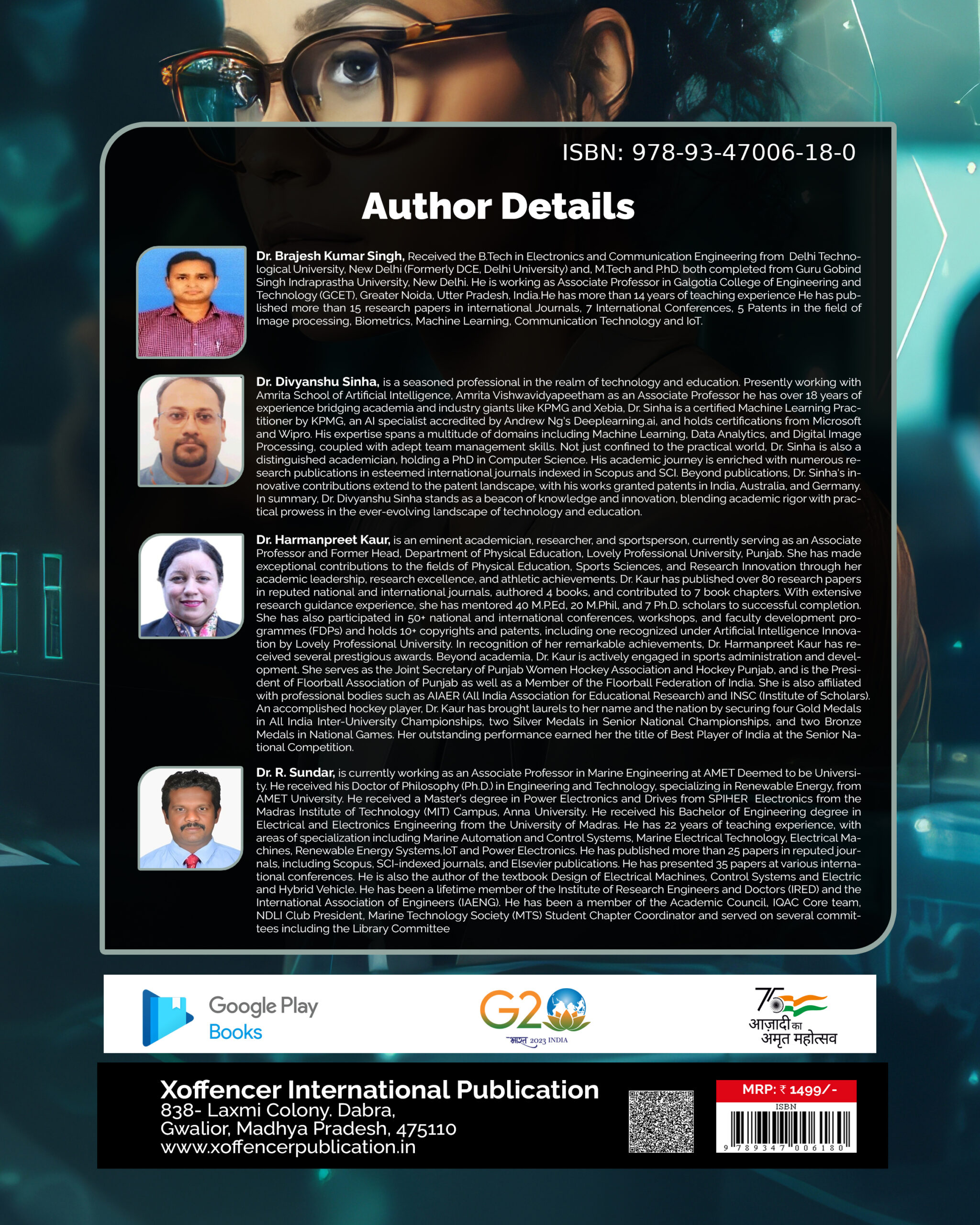
Dr. Brajesh Kumar Singh, Received the B.Tech in Electronics and Communication Engineering from  Delhi Technological University, New Delhi (Formerly DCE, Delhi University) and, M.Tech and P.hD.both completed from Guru Gobind Singh Indraprastha University, New Delhi. He is working as Associate Professor inGalgotia College of Engineering and Technology (GCET), Greater Noida, Utter Pradesh, India.He has more than 14 years of teaching experience He has published more than 15 research papers in international Journals, 7 International Conferences, 5 Patents in the field of Image processing, Biometrics, Machine Learning, Communication Technology and IoT.

Dr. Divyanshu Sinha, is a seasoned professional in the realm of technology and education. Presently working with Amrita School of Artificial Intelligence, Amrita Vishwavidyapeetham as an Associate Professor he has over 18 years of experience bridging academia and industry giants like KPMG and Xebia, Dr. Sinha is a certified Machine Learning Practitioner by KPMG, an AI specialist accredited by Andrew Ng’s Deeplearning.ai, and holds certifications from Microsoft and Wipro. His expertise spans a multitude of domains including Machine Learning, Data Analytics, and Digital Image Processing, coupled with adept team management skills. Not just confined to the practical world, Dr. Sinha is also a distinguished academician, holding a PhD in Computer Science. His academic journey is enriched with numerous research publications in esteemed international journals indexed in Scopus and SCI. Beyond publications, Dr. Sinha’s innovative contributions extend to the patent landscape, with his works granted patents in India, Australia, and Germany. In summary, Dr. Divyanshu Sinha stands as a beacon of knowledge and innovation, blending academic rigor with practical prowess in the ever-evolving landscape of technology and education.

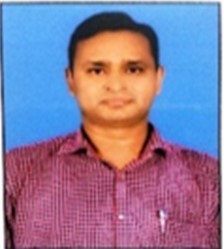
Dr. Harmanpreet Kaur is an eminent academician, researcher, and sportsperson, currently serving as an Associate Professor and Former Head, Department of Physical Education, Lovely Professional University, Punjab. She has made exceptional contributions to the fields of Physical Education, Sports Sciences, and Research Innovation through her academic leadership, research excellence, and athletic achievements. Dr. Kaur has published over 80 research papers in reputed national and international journals, authored 4 books, and contributed to 7 book chapters. With extensive research guidance experience, she has mentored 40 M.P.Ed, 20 M.Phil, and 7 Ph.D. scholars to successful completion. She has also participated in 50+ national and international conferences, workshops, and faculty development programmes (FDPs) and holds 10+ copyrights and patents, including one recognized under Artificial Intelligence Innovation by Lovely Professional University.

In recognition of her remarkable achievements, Dr. Harmanpreet Kaur has received several prestigious awards, including:

  • Mother Teresa Award by Human Growth and Development Society
  • Young Researcher Award by INSC – Institute of Scholars, under the Ministry of MSME, Government of India
  • Innotek Award on Patent in Artificial Intelligence by Lovely Professional University Beyond academia, Dr. Kaur is actively engaged in sports administration and development.

She serves as the Joint Secretary of Punjab Women Hockey Association and Hockey Punjab, and is the President of Floorball Association of Punjab as well as a Member of the Floorball Federation of India. She is also affiliated with professional bodies such as AIAER (All India Association for Educational Research) and INSC (Institute of Scholars).

An accomplished hockey player, Dr. Kaur has brought laurels to her name and the nation by securing four Gold Medals in All India Inter-University Championships, two Silver Medals in Senior National Championships, and two Bronze Medals in National Games. Her outstanding performance earned her the title of Best Player of India at the Senior National Competition.

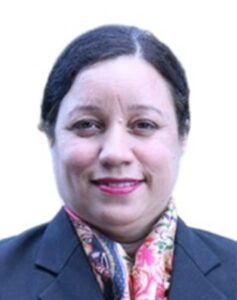
Dr. R. Sundar is currently working as an Associate Professor in Marine Engineering at AMET Deemed to be University. He received his Doctor of Philosophy (Ph.D.) in Engineering and Technology, specializing in Renewable Energy, from AMET University. He received a Master’s degree in Power Electronics and Drives from SPIHER  Electronics from the Madras Institute of Technology (MIT) Campus, Anna University. He received his Bachelor of Engineering degree in Electrical and Electronics Engineering from the University of Madras.

He has 22 years of teaching experience, with areas of specialization including Marine Automation and Control Systems, Marine Electrical Technology, Electrical Machines, Renewable Energy Systems, IoT and Power Electronics. He has published more than 25 papers in reputed journals, including Scopus, SCI-indexed journals, and Elsevier publications. He has presented 35 papers at various international conferences. He is also the author of the textbook Design of Electrical Machines, Control Systems and Electric and Hybrid Vehicle. He has been a lifetime member of the Institute of Research Engineers and Doctors (IRED) and the International Association of Engineers (IAENG). He has been a member of the Academic Council, IQAC Core team, NDLI Club President, Marine Technology Society (MTS) Student Chapter Coordinator and served on several committees including the Library Committee

Description

The construction of prediction models that utilize labeled datasets, wherein the learning process is directed by input-output pairs, is the focus of supervised learning, which is a core branch of machine learning. Algorithms are trained to map inputs to desired outputs by reducing the difference between the expected and actual outcomes in this technique. Classification, which gives categorical labels to data, and regression, which predicts continuous values, are two of the core tasks involved in supervised learning. Supervised learning applications are mostly based on methods such as neural networks, support vector machines, k-nearest neighbors, logistic regression, decision trees, and linear regression. In fields including as healthcare, banking, natural language processing, and computer vision, where precise forecasts and decision-making are of the utmost importance, these models are extensively utilized. Overfitting, underfitting, data imbalance, and the requirement for large, high-quality labeled datasets are all problems that supervised learning must overcome despite its efficacy. Gaining a fundamental understanding of supervised learning is necessary for those who want to enhance their skills in machine learning and artificial intelligence. It is an important field of study for researchers and practitioners alike since it lays the groundwork for more sophisticated approaches.

ell as resilient and secure by design.

Reviews

There are no reviews yet.

Add a review

Your email address will not be published. Required fields are marked *