

Sale!

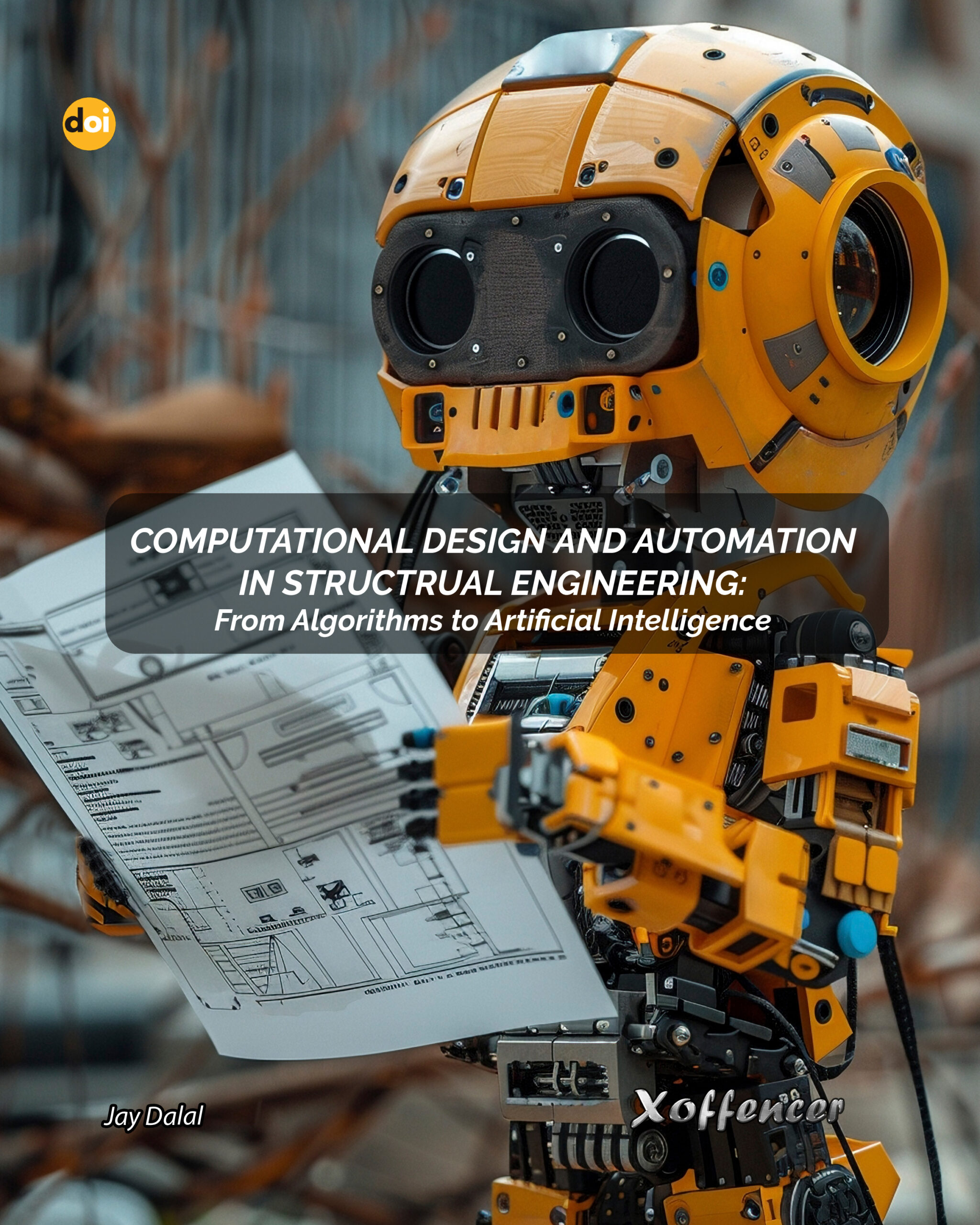
COMPUTATIONAL DESIGN AND AUTOMATION IN STRUCTRUAL ENGINEERING: FROM ALGORITHMS TO ARTIFICIAL INTELLIGENCE

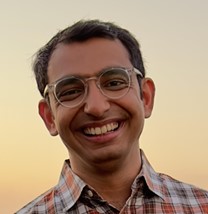
Mr. Jay Dalal

Mr. Jay Dalal is an accomplished technology leader and engineering innovator whose career spans structural design, software engineering and quantitative finance. With a rare blend of expertise in both structural engineering and computer science, Jay has consistently driven impactful solutions at the intersection of advanced technology, financial analytics, and infrastructure innovation. His ability to integrate cutting-edge computational tools with real-world business and engineering challenges has earned him recognition as a rising leader in both the engineering and financial technology domains.

Jay holds dual Master’s degrees—one in Structural Engineering from Stanford University, where he honed expertise in structural engineering, optimization algorithms, and artificial intelligence applications and another in Computer Science from the Georgia Institute of Technology, where he specialized in machine learning, natural language processing, and financial modeling. He graduated at the top of his class with a Bachelor of Technology in Civil Engineering from S V National Institute of Technology, Surat, where he was awarded the University Gold Medal for academic excellence. His academic journey was further supported by prestigious scholarships including the Tata Education and Development Trust Scholarship, JN Tata Endowment Scholarship, and KC Mahindra Scholarship, reflecting international recognition of his talent and potential.

Jay built a strong foundation as a Structural Engineer at HOK, one of the world’s leading design and architecture firms. At HOK, he contributed to globally recognized projects including where his role extended beyond traditional engineering; he pioneered automation workflows using Python, Dynamo, and Grasshopper to accelerate design processes, saving hundreds of engineering hours and improving accuracy across large-scale projects.

Among his most notable contributions was the development of a GPU-accelerated vibration analysis tool using PyTorch and CUDA, which reduced analysis time from days to minutes. This breakthrough not only enhanced the design of vibration-sensitive medical and laboratory buildings but also won company-wide recognition and a personal mention from CEO for innovation. Jay’s computational design initiatives positioned HOK at the forefront of technical excellence, giving the firm a competitive edge in securing high-profile, technically demanding projects.

Beyond his technical expertise, Jay is known for his leadership and mentorship. At HOK, he championed the integration of computational tools into daily workflows, mentoring young engineers in automation and parametric design practices. His leadership style combines technical rigor with an empathetic approach, ensuring both project excellence and team growth.

Description


Buildings, bridges, towers, dams, and other infrastructure systems that allow contemporary civilization to function have their scientific and technical basis in structural engineering, which has been an integral part of the built environment for a long time. Fundamental to the field is the idea of making sure buildings can withstand all kinds of loads and environmental factors for the whole time they’re supposed to be standing. Structural engineers have long used simplified analytical techniques and engineering judgment in addition to the basic concepts of mathematics, materials science, and mechanics. Although these principles are still important, structural engineers now think about, evaluate, and build structural systems quite differently due to the fast development of digital technology.
Reviews

There are no reviews yet.

Add a review

Your email address will not be published. Required fields are marked *